
IPC-A-600 CIS/Specialist

This course provides participants with comprehensive preparation for the IPC-A-600 CIS certification, which is recognised throughout the industry as the standard for printed circuit board acceptance criteria. The training provides the knowledge required for inspecting and assessing unassembled printed circuit boards during the outgoing inspection carried out by PCB manufacturers and the incoming inspection carried out by assembly manufacturers.
Based on the German translation of the IPC-A-600 standard, participants learn how to successfully apply the specifications in production, quality assurance and goods receipt, thereby saving considerable costs and production time. The criteria for assessing product quality range from conductor tracks and pads to through-holes and multilayer construction. Another key focus is understanding the three product classes (Classes 1, 2 and 3) and their specific requirements.
All participants receive a complete copy of the IPC-A-600 standard in paper format and, upon passing the examination, a certificate valid for two years. This must be renewed no later than two years after issue by means of an IPC-A-600 CIS/Specialist recertification. Recertification takes place during the ongoing IPC-A-600 courses at separate rates (excluding the new standard).
Module 1: Introduction
- Scope and field of application
- Technical Terms and Definitions
- Inspection methodology
- Applicable documents
- Classification
Module 2: Externally visible characteristics
- Base material surface
- Holes and contacts
- Circuit pattern
- Solder mask
- Solder coatings
- Markings
Module 3: Internal visible features
- Defects in the laminate
- Alignment of circuit pattern and hole pattern
- Delamination/bubbling
- Circuit/hole formation
- Microscopic examination of cross-sections
- Defects in the laminate (outside the heat zone)
- Delamination/bubbling
- Etchback
- Negative etchback
- Removal of resin smears (desmearing)
- Insulation clearances
- Layer spacing
- Resin shrinkage
- Trace pattern with etching characteristics, trace thickness, film thickness
- Residue ring (inner layers)
- Lifted connection pads
- Cracks in metallisation and films
- Bubbling
- Thickness of the metallisation
- Metallised holes
- Solder resist thickness
- Wicking effect
- Separation of inner layers
- Blind vias and buried vias
- Burrs and nail-head formation
- Roughness, bumps, funnels
Module 4: Miscellaneous
- Flexible and rigid-flex printed circuit boards
- Metal-core printed circuit boards
- Printed circuit boards with recessed conductors
The course concludes with the IPC-A-600 CIS examination. This qualification must be renewed every two years.
All IPC examinations take place online as multiple-choice tests in German on the IPC-EDGE portal (https://my.ipcedge.org). You will need your own account to take the exam. Subject to availability, the FED will lend each participant an iPad for the duration of the examination.
The course is aimed at professionals in the fields of quality assurance, manufacturing and development for whom a sound understanding of printed circuit board evaluation is essential.
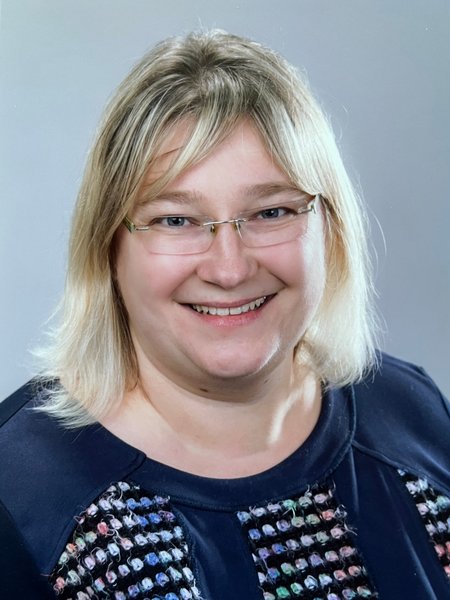
Kerstin Menz
has been pursuing her passion for quality issues ever since she began her career in 1997 at Jenaer Leiterplatten GmbH, where she trained as a physics laboratory technician. After completing her training, she held a managerial role there for many years, overseeing quality assurance as well as quality and environmental management; she integrated the requirements of ISO 9100 and qualified as a recognised quality management auditor. After more than 25 years, she moved into the EMS sector and now works as a quality and environmental management representative at ACD-Systemtechnik in Neustadt an der Orla, where she gained further qualifications in the field of ISO 13485.
In 2009, she began her qualification in the field of IPC standards by obtaining the CIS IPC-A-600. As part of her further professional activities, she completed the CIT IPC-A-600 and is now active as a MIT IPC-A-600. She supplemented this knowledge by obtaining the CIT IPC-A-610 certification.
She regularly conducts IPC training courses and user training sessions for FED e.V. – taking a practical approach, with passion, and always with the aim of conveying knowledge in a way that is easy to understand and immediately applicable.

David Lee
After studying International Economics and German at Aston University, Mr Lee began his career at the Würth Elektronik Group in the printed circuit board sales department, initially focusing on the UK market and later on international markets from a branch in Germany. This manufacturer’s perspective laid the foundation for his in-depth knowledge of PCB manufacturing technologies and customer requirements. Mr Lee has been working in strategic procurement at the BMK Group since 2015. He leads a large team of expert PCB buyers within the strategic procurement department. In this role, he acts as a commercial and technical expert, providing customers and internal specialist departments with in-depth insights into the market. His expertise is complemented by comprehensive global supply chain management and strategic supply chain development.
Alongside his work at BMK, David Lee is actively involved in the industry as a member of the IPC-A-600 Task Group, where he contributes to the development of quality standards and training documents. Mr Lee is actively involved in the IPC Advocacy Group, working to strengthen and enhance the resilience of the European electronics supply chain, and is involved in circular economy initiatives for electronic products. As an IPC trainer, he delivers certification training and trains PCB and EMS companies in quality control methods.
Sven Nehrdich
Sven Nehrdich has been immersed in the world of printed circuit boards for over 30 years. From development engineer to managing director, he has held almost every role in the industry.
After completing an MBA whilst working, he spent 16 years in senior management roles. In his training courses, he combines in-depth specialist knowledge with practical experience, clear examples and a touch of humour.